Ibn Arabi
Biography
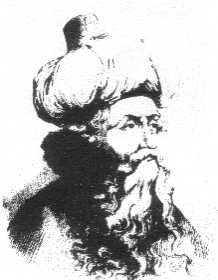
'Abū 'Abdullāh Muḥammad ibn 'Alī ibn Muḥammad ibn `Arabī al-Ḥātimī aṭ-Ṭāʾī (أبو عبد الله محمد ابن علي ابن محمد ابن عربي الحاتمي الطائي) was a Sufi mystic, poet, and philosopher born in Murcia, Spain on the 17th of Ramaḍān (26 July 1165 AD).[2] He is renowned among practitioners of Sufism by the names al-Shaykh al-Akbar ("the Great Shaykh"), Muḥyiddin ibn Arabi, and was considered a saint.[3][4] He was also known as Shaikh-e-Akbar Mohi-ud-Din Ibn-e-Arabi throughout the Middle East.[5]
Ibn Arabi was Sunni, although his writings on the Twelve Imams were also popularly received among Shia.[6] It is debated whether or not he ascribed to the Zahiri madhab.[7]
After his death, Ibn Arabi's teachings quickly spread throughout the Islamic world due to the soundness of his arguments. His writings were not limited to the Muslim elites, but made their way into the lower ranks of society through the widespread reach of the Sufi orders. Arabi's work also popularly spread through the poetic languages of Persian, Turkish, and Urdu. Many popular poets were trained in the Sufi orders and were inspired by Arabi's concepts.
Family
Ibn Arabi was of mixed parentage. His father was an Arab who belonged to the prominent Arabian tribe of Tayy,[9] while his mother came from a Berber family with ties to North Africa.[10]
In his writings, Al-Arabi mentions a deceased maternal uncle, Yahya ibn Yughan al-Sanhaji, who was a wealthy prince of the city of Tlemcen, but had left that position to lead a life of spirituality after encountering a Sufi mystic.[11]
His father, ‘Ali ibn Muḥammad, served in the Army of Muhammad ibn Sa'id ibn Mardanish, the ruler of Murcia.[12] When Ibn Mardanīš died in 1172 AD, his father shifted his allegiance to the Almohad Sultan, Abū Ya’qūb Yūsuf I, and again went into government service. His family then relocated from Murcia to Seville.[5] Ibn Arabi grew up among the ruling court and received military training.[12]
As a young adult Ibn Arabi was secretary to the governor of Seville. He had married a woman by the name Maryam who was from an influential family
Comments
Post a Comment